Spotlight on STEM
Why Problem-Solving Starts with Play
A child wants to make something work. Play gives them a reason to try, and a problem worth figuring out.
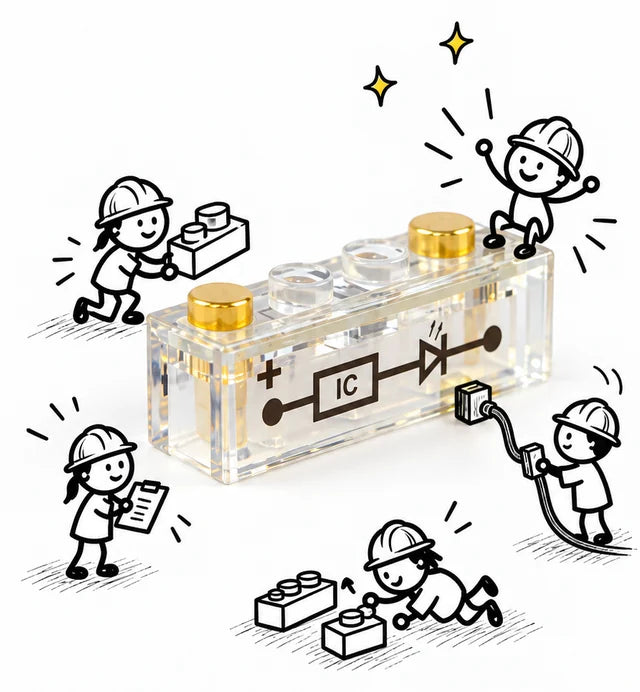
When we demonstrate SparkBlocks at events, we get to watch families approach the same challenge in different ways. Some parents spot a problem and reach to fix it. Others wait, offering gentle encouragement while their child works through it. Watching your child struggle can be uncomfortable, especially when you can see how to help.
We generally don't interrupt. We get to see those different approaches, and we especially enjoy the moments when a child has had room to figure something out. The delight when it finally works is lovely to share with them and their parents. Those moments stay with us after an event.
Let the build ask the question

That is what we mean by problem-solving starting with play. A child wants to make something they can use, so a difficulty becomes something worth investigating. It gives a purpose to questions that might otherwise feel abstract. What should this do? What could I try? We want SparkBlocks to give families room to explore those questions together.
Imagine building a fan together and finding that it won't turn. Before moving any pieces, look at what you have made. Compare it with the guide. Can your child point out a connection they want to check? Working out what needs attention is part of solving the problem, even before anything changes.
You can ask what they notice without turning the conversation into a quiz. Give them time to show you. Their idea might explain the problem, or it might lead somewhere else. Either way, you have something to investigate together. You don't need to know the answer before you can be interested in their thinking.
Change one thing, then look again

Keep the rest of the build the same while you check one connection. If you move several pieces at once, it becomes harder to tell which change mattered. Following the kit's instructions, switch the build off before making an adjustment, then ask what your child expects to happen when you test it again.
This is a small example of fair testing, an engineering practice included in the Next Generation Science Standards for grades 3–5. Those standards also describe using test results to find difficulties in a design. A fan that still won't turn gives you a reason to look again and reconsider your explanation.
Compare the result with your prediction. Did the fan turn? Does it work again when you repeat the test? A quick drawing or note can help you remember what you checked. If your first idea wasn't right, talk about what you would check next and why. Changing your mind after a test is useful too.
At our demo tables, we see the finished moment when it comes together. At home, there is room to talk about how you got there. Asking your child to show you what they changed lets you share in their discovery, even if you could already see the solution.
Leave room for another try

Leaving room to try still includes helping. You might hold a model steady or find the relevant page in the guide. Ask whether they want a hand. If frustration takes over, put the build aside for a while. The point is to enjoy making something together, and some days that means coming back later.
If the build works first time, enjoy it. Invite your child to show you how the circuit is connected. When they want another challenge, choose another build from the guide together. There is plenty to explore without creating a fault for them to fix.
We want to make space for the satisfaction we get to share with families at events: a child working something out, with people beside them who are glad to see it happen. Play gives that process somewhere to begin. For us, that is part of the purpose behind SparkBlocks, and a reason to keep listening to how families use it.
“What do you think will happen if we change this?”
Try this: a 15-minute table experiment
Set aside about 15 minutes to explore the fan build together. Keep your kit's guide nearby, and give yourselves longer if you need it.
-
Follow the guide to build the fan circuit. Before testing it, ask what your child expects to happen.
-
If it doesn't work, switch it off and check one connection against the guide. Predict, then test again.
-
When it works, ask your child to show you the connections. If it worked first time, start here. Choose another guided build when you're ready.

Something to build together
If you would like to explore SparkBlocks at home, take a look at the Intro Kit and choose where to begin.
Explore the Intro Kit